Tuesday, May 15, 2012

I noticed a Kanji (2):  動 (どう motion; change; confusion)


動 is related to moving or a movement. So if you pay close attention, you can notice it in a lot of words that are related to motion.


動く           うごきます           to move;

          どうし               verb

電動           でんどう             electric

動物達         どうぶつたち         animals

感動・する     かんどう・します     being deeply moved emotionally;

活動・する     かつどう・します     to do activity

自動車         じどうしゃ           automobile

自動車道       じどうしゃどう       expressway; motorway
働く           はたらく             to work; to labor; to labour;

運動・する     うんどう・します     to exercise


Tuesday, May 8, 2012

Learning Japanese: Interesting Video Logs (1): CultureQuirk

Delphine explains the basics of Japanese in her own style: clear English, to the point and a little fast. もう 少し ゆっくり話してください。
But watching her video clips will get you up to date in short time.
Excellent Japanese for busy people (pun intended)


Tuesday, May 1, 2012

Learning Japanese: Learn Japanese Adventure


Well-seasoned engineer and student of Japanese, Kia Leng (Mr. Koh) has written a series of articles on the same topics as you learn in class. He did a wonderful job, and must have spend a lot of time on it.


Besides good (and correct) explanations, you will find lists of words (kana, kanji, romaji, English) and examples sentences. These are truly valuable as you can simply copy them and input them in you Anki SRS.
So I highly recommend this site and encourage you to give him feedback on his efforts.


Sunday, April 22, 2012

I noticed a Kanji(1): 見 (み、けん looking; viewing)


As mentioned in one of the previous entries, one of Steve Kaufman’s tips is to look at the language actively and notice patterns, returning words, and so on.
There are many kanji that keep recurring in several words. If you notice and recognize them, this can help you in remembering the kanji for nouns, as well as the meaning of compounds and verbs.

At a certain point, I found that I started recognizing kanji and as such understanding the meaning of a word without actually having learned that word, especially if it exists out of several kanji. This was actually very stimulating and encouraged me to memorise more kanji than those that we learned in class.

This is the first of a series or articles where I share the kanji that I notice and recognize in other words.

見える      みえます          to look; to seem; to appear;

発見・する はっけん・します  to discover;

花見        はなみ            cherry blossom viewing; flower viewing
意見        いけん            opinion; view; comment

見出し      みだし            heading; headline; caption; subtitle; index

会見        かいけん          interview; audience

見学        けんがく          to visit a factory for study

見本        みほん            sample

Sunday, April 15, 2012

Learning Japanese: Maki's blog

This is Maki's blog. She writes little stories in English. For me, the most interesting part are the pages where she explains Kanji. She follows a children’s Kanji-teaching book, and explains the contents in English.
One by one she describes the background and the current use of the Kanji.


Almost daily she ads a new text in her blog at Language-Exchange.com. This is a platform where students can upload a text and other participants can correct or give feedback.

Sunday, April 8, 2012

Learning Japanese: AJATT

The topic of the All Japanese All The Time website is learning Japanese through immersion. This technique of exposing yourself to the language of your choice as much as possible is seen as one of the best ways to learn a language. It’s how kids do it as well, without going to school: just listening to the language, being exposed to it 24/7. Of course, not all of us can be so extreme, but in essence it’s good advice.


The number of articles is large, and Khatzumoto has his own writing style.
But I’m sure you will fine some useful tips.

Sunday, April 1, 2012

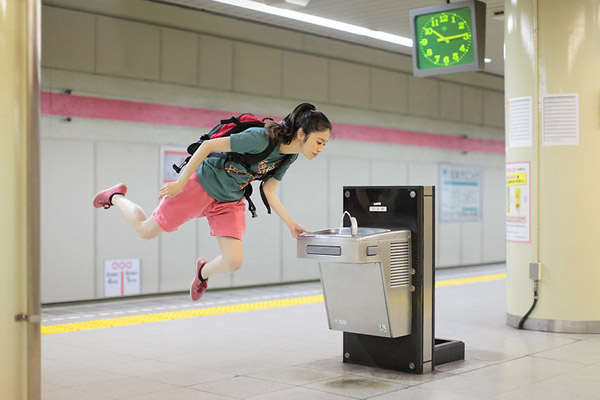
Japanese women can fly!

本当だ! I was so surprised to learn about this hidden talent.


And they mostly do it when nobody is looking.
But the proof is there, because photographer Hayashi Natsumi managed to take some pictures on the levitation.


Check out her website Yowa Yowa Camera Woman Diary, and join me in being flabbergasted.